
Founder's Corner
Srini’s Musings
Nov 7, 2025An Unremarkable Immigrant Story
Like most immigrants, we moved to the US because we saw it as a land of progress and immense opportunity – we had access to a great education, America’s robust infrastructure, and if we were practical about career selection and worked hard, anything was possible. In other words, because meritocracy ruled the day, the principal factor in our success or failure emanated from ourselves. And indeed, the course of my family’s lives have been dictated by this simple credo – my parents provided a comfortable middle class life for us, and I and my siblings were given the opportunity to pursue our dreams. As long as those dreams involved a stable and fruitful career.
As mentioned in my Serendipity section, I was so fortunate that we moved to the US when we did, and I am unquestionably the lucky beneficiary of what this system has to offer. Of course, I worked (and continue to work) hard to utilize what is available here, but I was happy and proud to earn what I could through commitment and perseverance. And I feel incredibly grateful and fortunate to have been in the American biotech ecosystem for the last 27 years – starting at Genentech (the best biotech company ever!) and then as an investor in this amazing community for 24 years. Over the last 50 years, I’ve seen countless other immigrants flourish here – whether they came as a child (as I did), or as a college student (like my roommate), or for grad school or a post-doc (like many of my friends from Stanford), or as a young faculty member (like my thesis advisor), or to work via the H-1B visa program (like many of the drivers of Silicon Valley’s exponential growth). The common thread was opportunity, and the common response was gratitude, hard work, and collaboration with fellow Americans and immigrants – and, because most stayed here to build their careers, the result was incredible contributions that reverberated throughout society.
Over the last 50 years, the US has created an amazing innovation engine that has touched all of our lives with important new medicines. This is rooted in fundamental research at universities that was principally funded by the NIH; and then progressed through drug discovery, preclinical and clinical development in biotech and pharma; and eventually to patients, leading to transformative effects on countless patients’ quality and length of life. And currently, we are undoubtedly in a massive innovation cycle in biotech, which will create over the next 20 years more and better new therapies than the last 20 years. This will affect all of us – and the impact will be extraordinary.
However, the current administration’s anti-science, anti-academia, and anti-immigrant policies threaten to dismantle this engine, to meaningfully diminish the pace of new medicines getting to patients, to cause a brain drain out of the US (the US benefited greatly from the opposite over the last 70 years), and to cede scientific and technical leadership to China. There is zero logic to this effort, especially with so much evidence as to the benefits of funding academic research, and the far-reaching impact of attracting extraordinarily talented individuals from all over the world to America. Unlike my experience here (up until now), current PhD students and post-docs are worried about their future in the US; current young faculty are now answering recruiter calls for opportunities elsewhere; and immigrant scientists who were planning to come here are rerouting their plans. The immense gravitational pull that the US had for talented people from all over the world has been turned inside out.
In the end, we have to ask the simple but important question of what truly makes America great? Among other items, two critical components are immigrants and scientific/technical leadership – and these components (in healthcare as well as IT) are not just inextricably linked, they are in fact symbiotic. It is unbelievable that an administration that purports to strengthen and build up the US is pushing policies to do exactly the opposite. And as an immigrant and scientist (ok, ex-scientist), I am deeply concerned.
Serendipity Capital
I’ve had all kinds of luck in my life, that I should’ve named the fund Serendipity Capital:
- My family and our move to the US (5 years old).
- My wife (and family).
- My career progression was a series of dumb lucks.
- I am so fortunate to be investing in biotech in this moment in time – working with amazing individuals at Samsara and in our portfolio companies – and most importantly, the potential for massive impact on patients from this community.
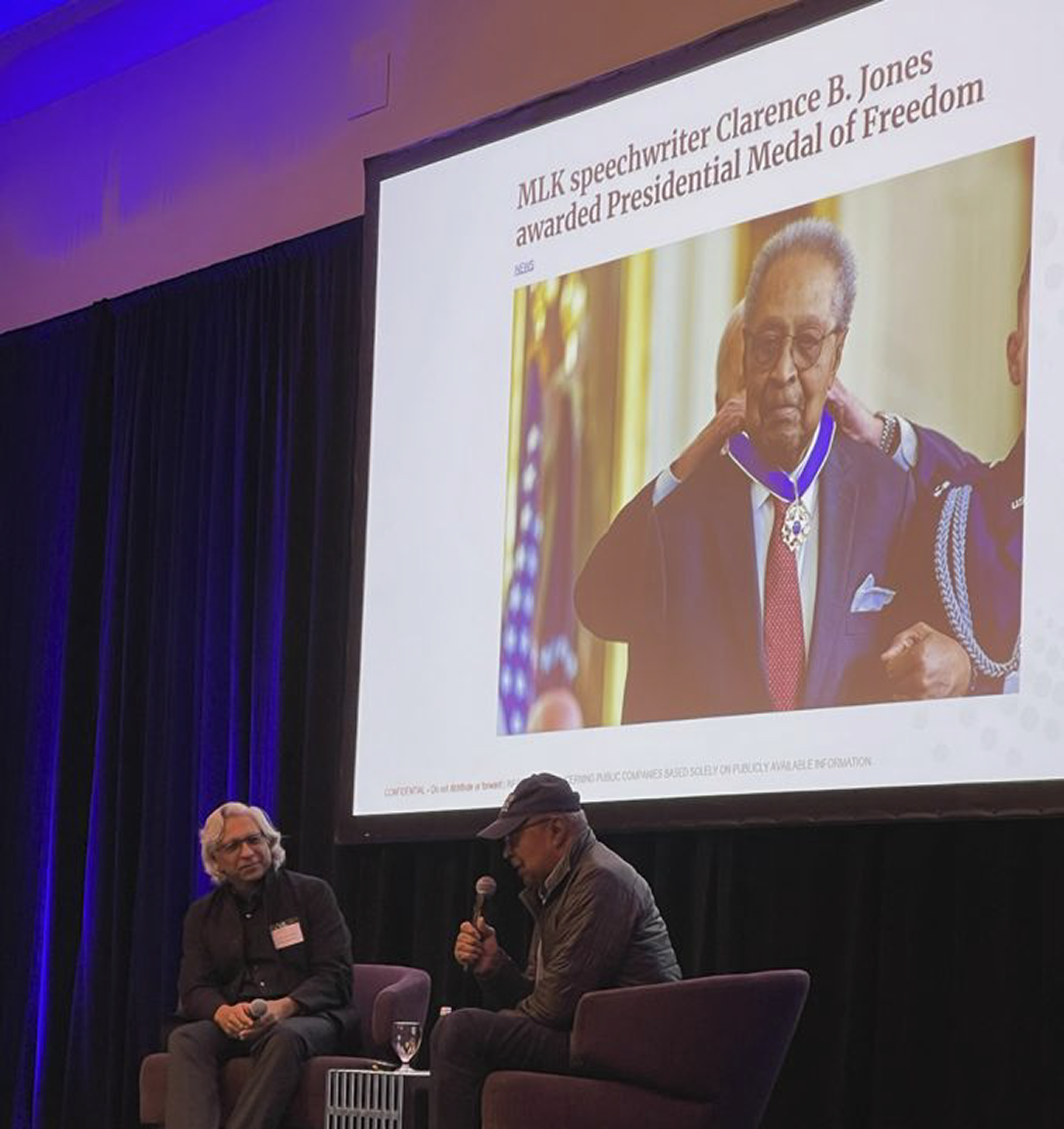
- Luckiest event in 2024 was randomly meeting and befriending Clarence B Jones.
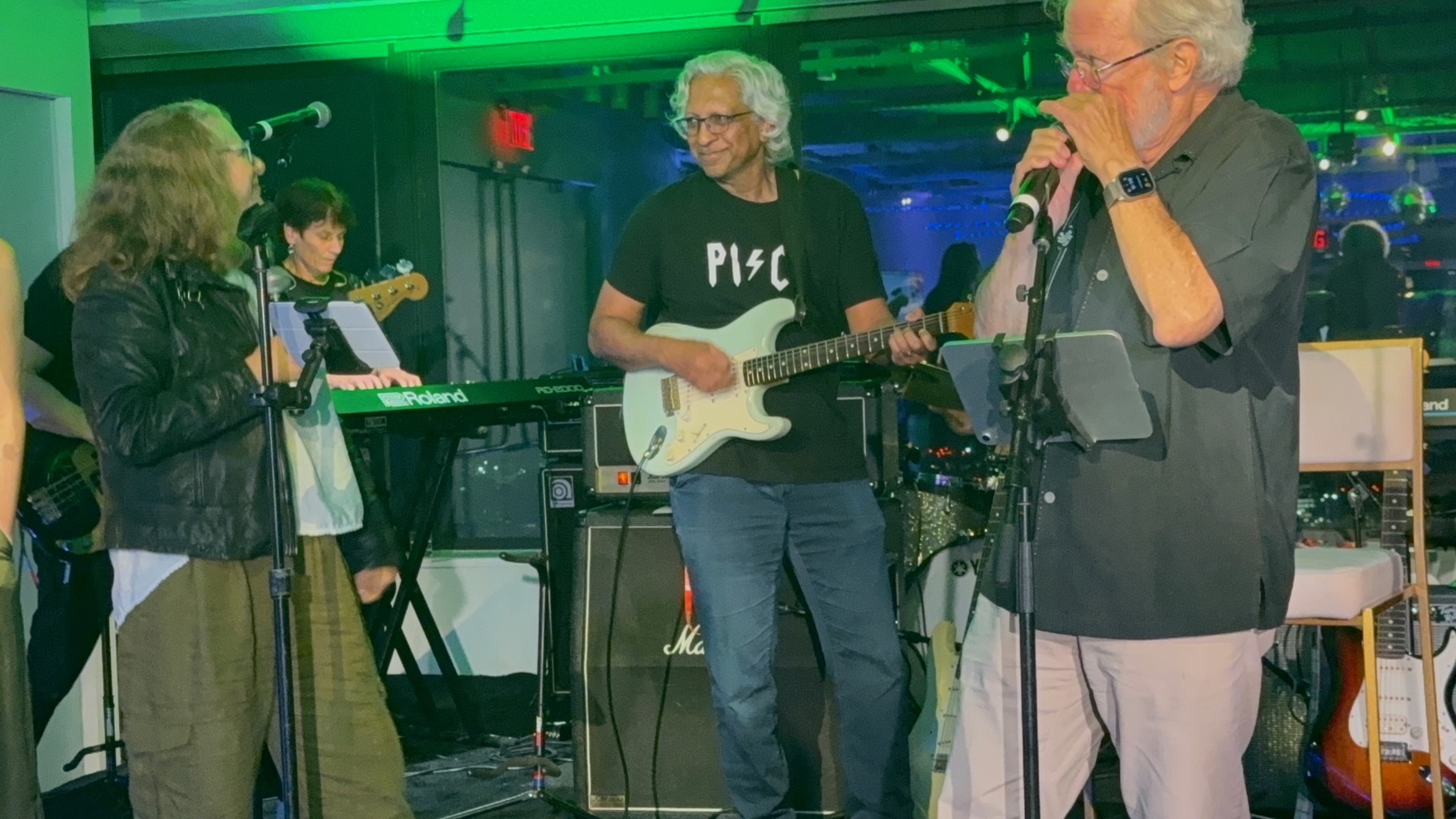
- Luckiest event in 2025 was being on stage (briefly) with Jim Allison and Carolyn Bertozzi.

Science Talks
Coming soon